Visualizing Naqab
Interactive work
Research, Mapping , and Data Visualization
Research, Mapping , and Data Visualization
William Kinne Traveling Fellowship, 2017
Visualizing the Naqab (2016-2019) is a platform that aims to make evident existing systems of governance manifested as abuse of territorial power and natural resources and acts of hostility that expose the Bedouins of the Naqab desert to precarity and dispossession. It also tries to operate as an amplifier to the Palestinian Bedouins’ narratives and struggle for existence and recognition.
After the establishment of the Israeli state in 1948, 90% of the 100,000 Bedouins (Weizman, The conflict shoreline: colonization as climate change in the Negev Desert) were violently displaced out of the Naqab and by 1966 a well-tested colonial strategy came into play: seven concentration towns were being built, with the intent to uproot the Bedouins from their lands and force them to abandon their pastoral and agrarian lifestyle for a hopeless urbanization that would
render them an easily controllable sub-proletariat with no agency.
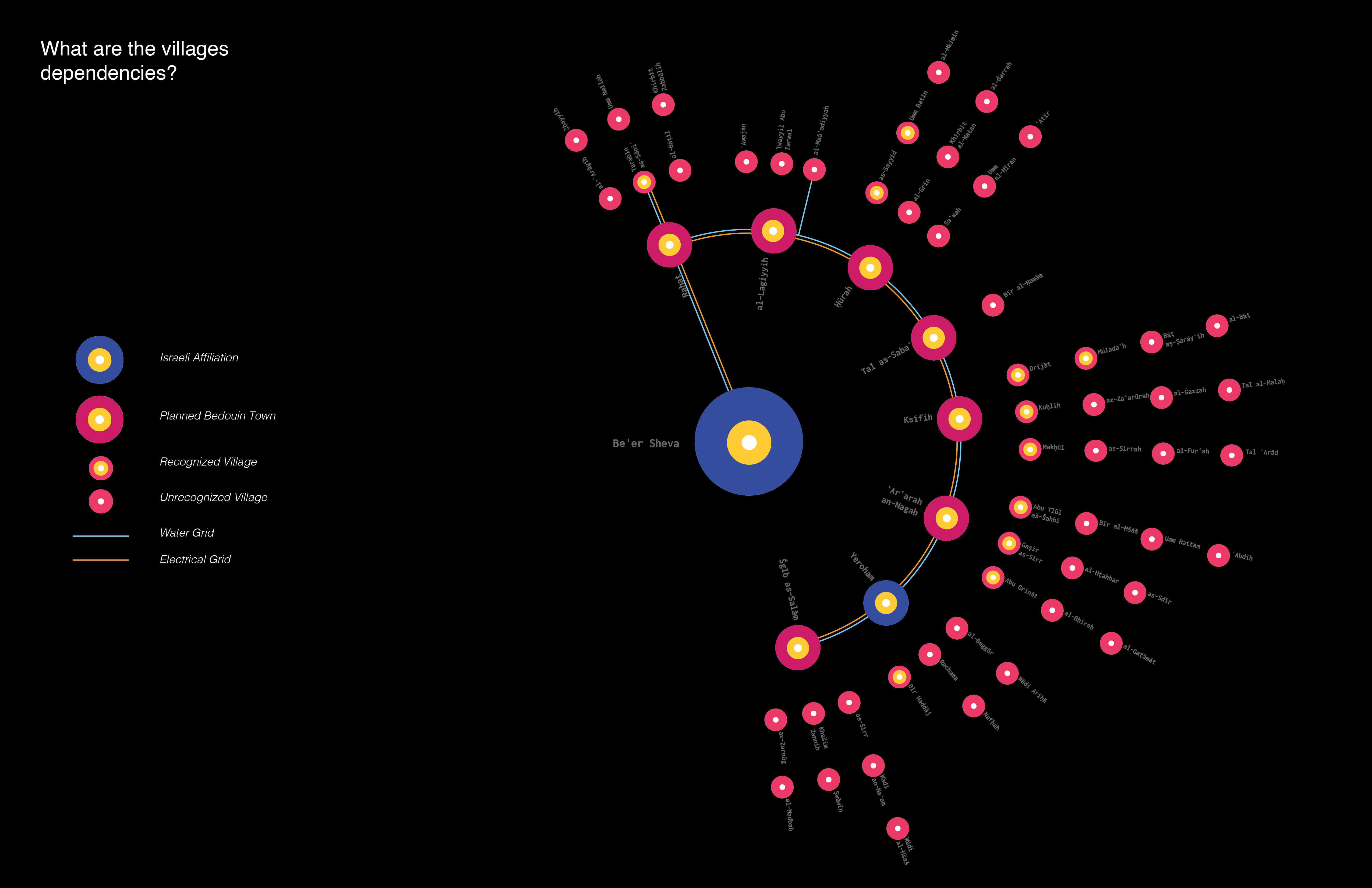
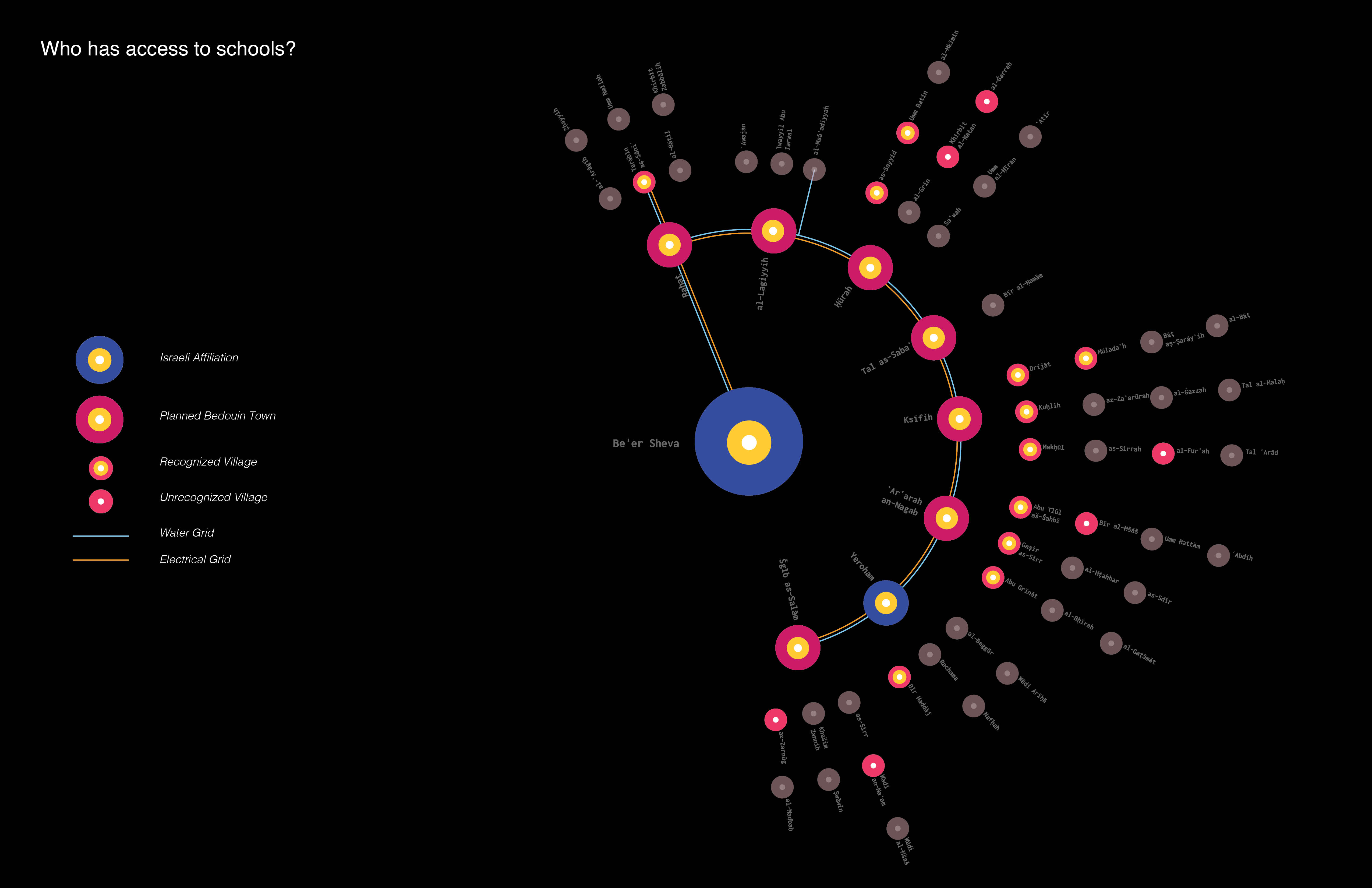
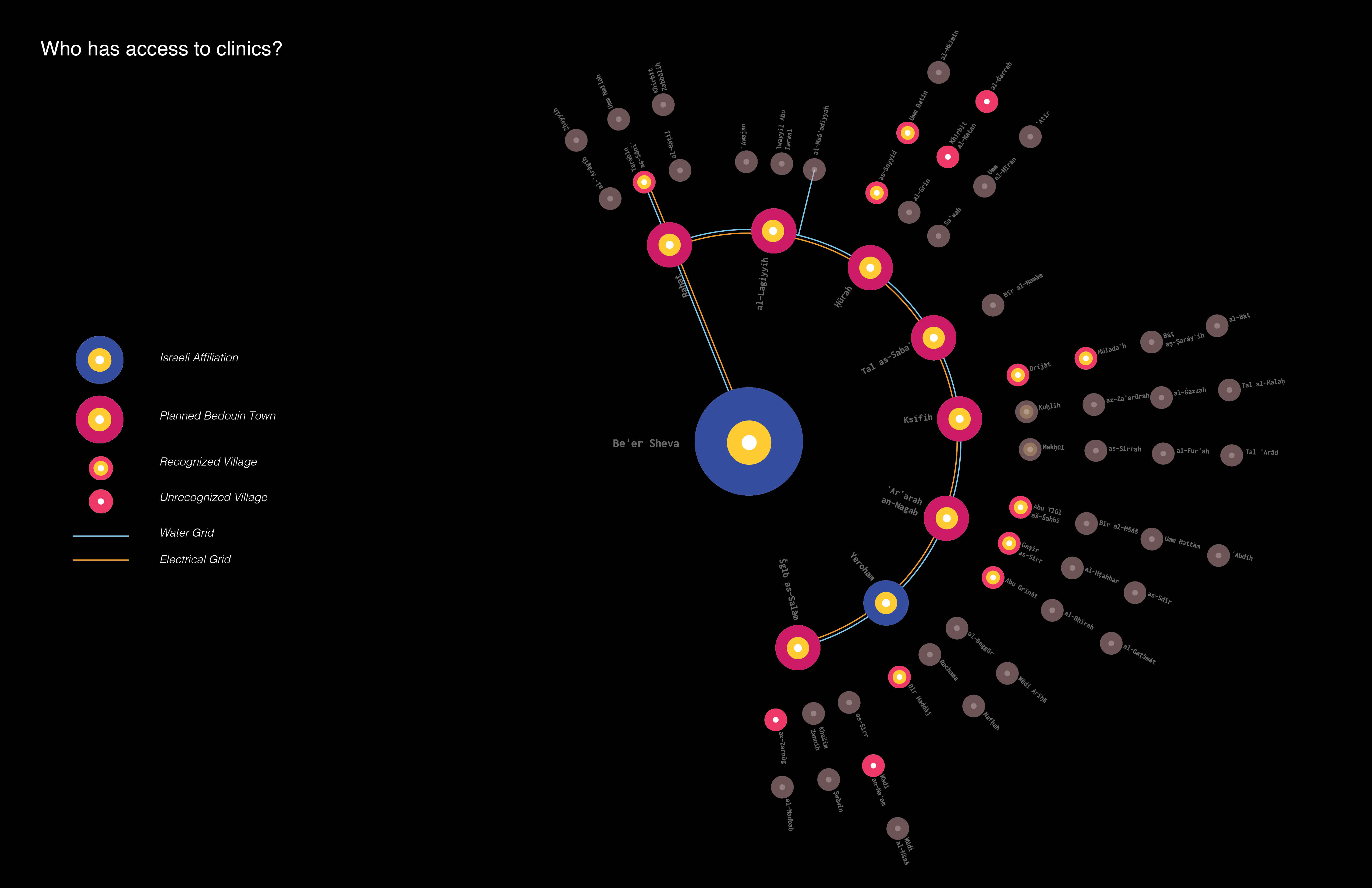
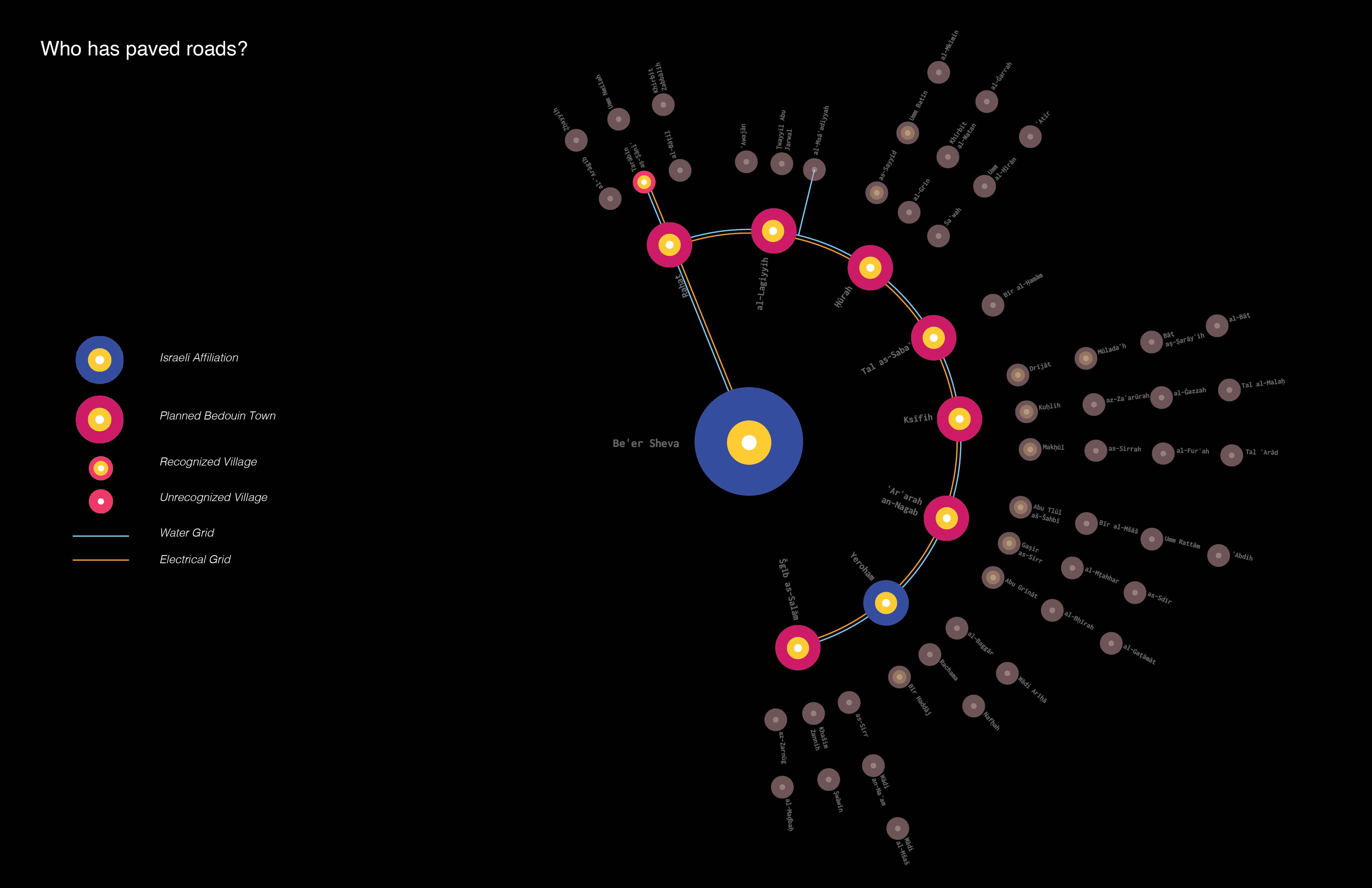
There are invisible systems of inclusion and exclusion that are set in place by Israel in an effort to disenfranchise the Palestinian Bedouins. The aim is to render them evident by visualizing the dependencies between the villages, the planned towns and Beersheva; the lack of educational and medical resources; the infrastructure that brings them together or stands between them.
The information is drawn from the Negev Coexistence Forum for Civil Equality archive.
After the establishment of the Israeli state in 1948, 90% of the 100,000 Bedouins (Weizman, The conflict shoreline: colonization as climate change in the Negev Desert) were violently displaced out of the Naqab and by 1966 a well-tested colonial strategy came into play: seven concentration towns were being built, with the intent to uproot the Bedouins from their lands and force them to abandon their pastoral and agrarian lifestyle for a hopeless urbanization that would
render them an easily controllable sub-proletariat with no agency.
There are invisible systems of inclusion and exclusion that are set in place by Israel in an effort to disenfranchise the Palestinian Bedouins. The aim is to render them evident by visualizing the dependencies between the villages, the planned towns and Beersheva; the lack of educational and medical resources; the infrastructure that brings them together or stands between them.
The information is drawn from the Negev Coexistence Forum for Civil Equality archive.

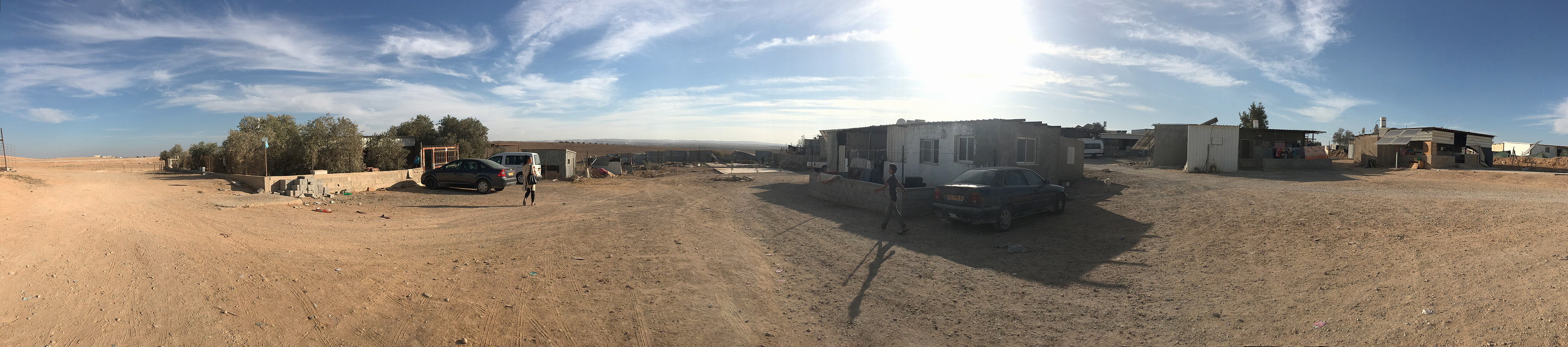
Oral testimony is the Bedouins' main means of keeping their history and traditions. The visits to Alcira and Al-Araqib gave insight into their deep connection to the land and their unyielding perseverance known as Sumoud.
Khalil Alamour, resident of the Bedouin Naqab, Human Rights Lawyer and Chair of the Regional Council for the Unrecognized Villages of the Naqab, speaking in Alcira. Recorded during a visit in the unrecognized villages of Alcira and Al'Araqib, 2016.